Skip to content
Tuesday, October 6, 2026
Latest:
  • 🤖 Can We REALLY Trust AI? | Inside the Black Box of Artificial Intelligence
  • A Tribute to Kahneman and Tversky in the Context of Mathematics Education
  • Teaching Risk Literacy through Simulations: How Children Learn to Navigate Uncertainty
  • From Proportions to Decisions: Enhancing Risk Literacy through Visual and Logical Tools
  • Empowering Informed Citizens through Data Science: A Pedagogical Framework for Democracy in the Digital Age
Bounded Rationality and Education

Bounded Rationality and Education

Bounded Rationality and Education

  • Herbert Simon Society
  • Other Videos in this site
  • Contact
  • Papers
  • Team

journalism

Other Videos in this site 

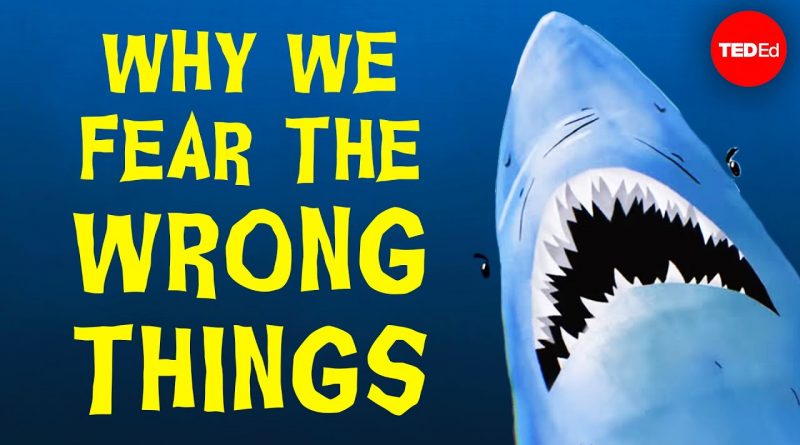
Why do people fear the wrong things? – Gerd Gigerenzer

February 25, 2021February 25, 2021 nw3no37q 0 Comments absolute risk, absolute risk reduction, animation, breast cancer, breast cancer screening, clickbait, evaluate risk, heart attacks, how to evaluate risk, journalism, misleading headlines, misleading health information on the internet, misleading statistics, news, relative risk, relative risk reduction, risk, risk reduction, shark attacks, statistics

A new drug reduces the risk of heart attacks by 40%. Shark attacks are up by a factor of two.

Read more

About this site

Logo

Links between Bounded Rationality and Education have been particularly strong during the last decades. Indeed, the Enlightenment view of rational human minds reasoning, making decisions and solving problems based on logic and probabilities, was shaken during the second half of the twentieth century. Cognitive psychologists and economists discovered that humans'thoughts and actions often deviate from rules imposed by strict normative theories of inference.

These discoveries have an impact on Education. So called "errors", a fundamental phenomenon in education, should be analysed from this perspective: as the results on Bounded Rationality have demonstrated, many deviations may be either valid heuristics that succeed in the environments in which humans have evolved, or biases that are caused by a lack of adaptation to abstract information formats. Humans, as the cognitive psychologist and economist Herbert Simon claimed, do not usually optimize, but rather satisfice, even when solving problem.

Recent Posts

  • 🤖 Can We REALLY Trust AI? | Inside the Black Box of Artificial Intelligence
  • A Tribute to Kahneman and Tversky in the Context of Mathematics Education
  • Teaching Risk Literacy through Simulations: How Children Learn to Navigate Uncertainty
  • From Proportions to Decisions: Enhancing Risk Literacy through Visual and Logical Tools
  • Empowering Informed Citizens through Data Science: A Pedagogical Framework for Democracy in the Digital Age

ColorMag Pro

Copyright © 2026 Bounded Rationality and Education. All rights reserved.
Theme: ColorMag by ThemeGrill. Powered by WordPress.